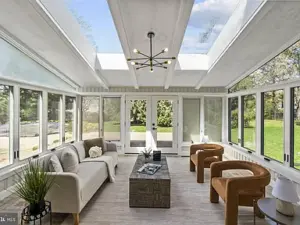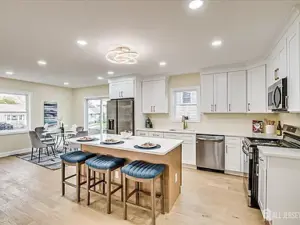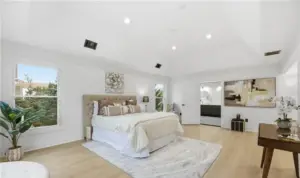
In a 2026 real estate market, your first showing doesn’t happen at the front door—it happens on a smartphone screen.
If your listing photos don’t “stop the scroll” in those first two seconds, the buyer has already moved on.
At Lyttle Staging, we often hear homeowners say, “My home looks great in person, why do I need to stage it for photos?” The answer lies in the science of optics. The camera lens does not see the world the way your eyes do.
Here is why staged homes dominate the MLS and how you can prep your space for its close-up.
The Camera vs. The Human Eye
The human eye is incredible at processing depth and filtering out “noise.” When you walk into a room, your brain automatically ignores the charging cable on the floor or the slightly mismatched pillows.
The camera lens is not so forgiving. It flattens a three-dimensional room into a two-dimensional image.
- The “Blob” Effect: Without staging, a room can look like a flat “blob” of color. We use High-Contrast Staging—placing a dark charcoal throw on a light linen sofa—to create the depth and “pop” that a digital sensor needs to make a room look inviting.
- The Scale Struggle: Empty rooms actually look smaller on camera. Without a sofa or a bed to provide scale, the brain can’t calculate the dimensions of the space, leading to “space-confusion” for the buyer.
The “90-Second Rule” and the MLS
Data from 2025 shows that homes with professional staging and high-end photography receive triple the views in their first week. This is because staging creates a “Life of Freedom” narrative. We aren’t just selling four walls; we are selling the feeling of a quiet morning in a sun-drenched breakfast nook.
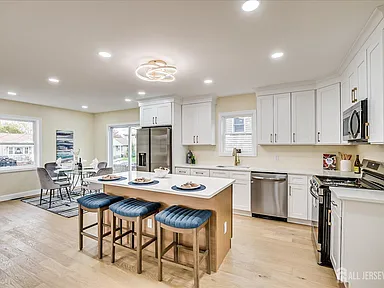
The “Lyttle” Photo-Prep Checklist
Once the staging is complete, there are a few “micro-details” that ensure the photographer captures your home’s best side. Use this checklist on the morning of your shoot:
1. The Light Mission
- Open Everything: Open all blinds and curtains fully. If you have “Scandi-Luxe” sheer linens, let them filter the light, but make sure the views are accessible.
- Turn Off the Fans: Ceiling fans should be OFF. A moving fan creates a “blur” in high-end photography that makes a room feel chaotic.
- Lightbulb Audit: Ensure every lamp has a working bulb, and ideally, they should all be the same “color temperature” (Warm White is our signature choice).
2. The Kitchen & Bath “Edit”
- Clear the Counters: Remove every appliance, including the toaster and the coffee maker (unless it’s a high-end designer piece).
- Hide the “Life”: Remove sponges, dish soap, and paper towels. In the bathroom, hide all toothbrushes, razors, and shampoos.
- The Toilet Rule: It’s simple but non-negotiable—toilet lids down.
3. The Exterior Handshake
- The Driveway: Move all vehicles away from the front of the house. An empty driveway makes the property look more expansive and “ready for move-in.”
- Curb Appeal: Hide garden hoses, trash cans, and any stray toys.
The Secret Sauce: HDR and Post-Processing
When Lyttle Staging works with photographers, we look for HDR (High Dynamic Range) experts. This technique merges multiple exposures so that you can see both the interior details and the beautiful view out the window simultaneously.
By combining professional staging with advanced photography, we ensure your home doesn’t just look “good”—it looks like a destination.
Ready to make your home a “scroll-stopper”? Contact Lyttle Staging today to schedule your photo-ready transformation and start your journey toward a life of freedom and purpose.