In the modern world, “freedom” often means the ability to work from anywhere.
Deep Work—a term coined by author Cal Newport—is the ability to focus without distraction on a cognitively demanding task. It’s where your best ideas are born and where your most purposeful work happens. At Lyttle Staging, we believe your environment is the silent partner in your productivity.
Whether you are staging your home for sale or styling your forever office, here is how to create a “Lyttle” sanctuary for focus.
1. The Power of “Visual Quiet”
The brain is constantly scanning its environment for “noise.” In an office, visual clutter equals mental clutter. Every unfiled paper or tangled cord is a “micro-distraction” that pulls you out of your flow.
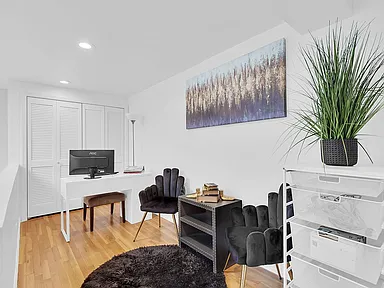
- The Staging Strategy: We use the “Clear Surface” rule. A desk should hold only the essentials: a high-end lamp, a single notebook, and perhaps a curated object of inspiration.
- The “Lyttle” Touch: Use closed storage (like sleek, Scandi-style cabinets) to hide printers and files. If you can’t see the “to-do” list, your brain can focus on the “now.”
2. Ergonomics Meets Elegance
You cannot achieve a state of flow if your body is in pain. However, “ergonomic” doesn’t have to mean “industrial.”
- The Strategy: Invest in a chair that offers lumbar support but is upholstered in a high-end fabric like bouclé or top-grain leather.
- The ROI: In staging, a dedicated, professional-looking office space is one of the highest-demand features for buyers. It signals that the home supports a modern, successful lifestyle.
3. The “Biophilic” Productivity Boost
As we’ve discussed in our [Biophilic Design blog], nature is a natural cognitive enhancer. Studies show that even a small view of greenery can increase productivity by up to 15%.
- The Strategy: Position your desk to face a window (the “External View”) or place a vibrant plant, like a Snake Plant or ZZ Plant, within your immediate line of sight.
- The Purpose: These natural elements provide “soft fascination,” allowing your focused attention to rest and recharge during small breaks.
4. Color Psychology for the Mind
Color significantly impacts brain waves. To inspire deep work, we move away from high-energy reds or yellows and lean into the “Calm & Collected” palette.
- Sage & Moss Greens: Promote restfulness and long-term focus.
- Deep Navy or Inky Green: Creates a “cocoon” effect, perfect for a library or a high-focus study.
- Warm Greige: Provides a neutral, low-stimulus backdrop that prevents eye strain.
5. Lighting the Path to Purpose
Lighting should be layered to prevent the “afternoon slump.”
- The Setup: Combine natural light (to keep your circadian rhythm in check) with warm task lighting. A sculptural desk lamp in brushed gold or matte black serves as a “functional icon,” defining the workspace.
- The Pro Tip: Avoid overhead fluorescent lighting at all costs; it triggers a stress response that kills creativity.
The Deep Work Office Checklist
| Element | The “Lyttle” Choice | The Benefit |
| Desk Placement | Facing the Room or Window | Command Position / Reduced Anxiety |
| Texture | A Low-Pile Wool Rug | Acoustic Dampening (Quieter Calls) |
| Scent | Eucalyptus or Peppermint | Mental Clarity & Alertness |
| Tech | Hidden Cord Management | Zero Visual Distraction |
Staging for the “Future Professional”
When Lyttle Staging prepares a home office, we aren’t just placing a desk; we are staging a result. We want the buyer to walk in and think, “I could write my book here,” or “I could scale my business in this room.” We stage for the life they want to lead.
Is your workspace hindering your hustle? Whether you’re looking to inspire buyers or yourself, Lyttle Staging can help you design a home office that works as hard as you do. Contact us today to get started.